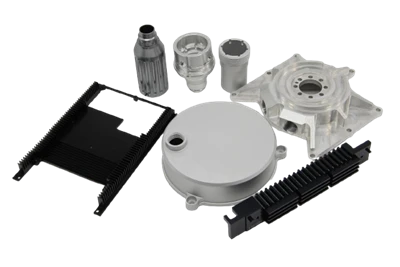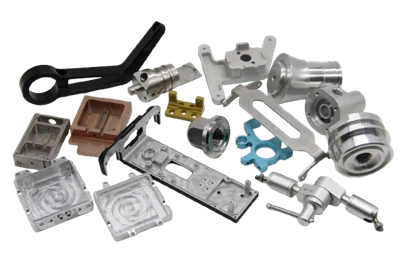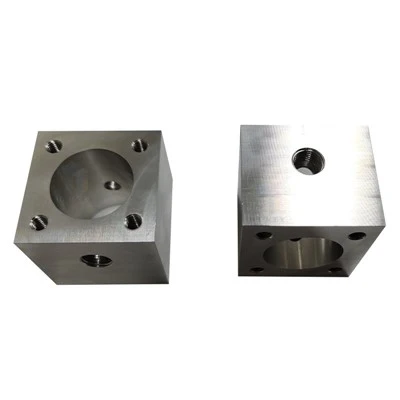

Turning is a machining process in which a cutting tool removes material from a rotating workpiece; it is a form of lathe machining. The process relies on the coordination between the workpiece's rotation and the linear or curvilinear movement of the cutting tool. By swapping in tools such as drill bits, counterboring bits, or reamers, operations like drilling and counterboring can also be performed. Turning is suitable for manufacturing parts such as shafts, discs, and sleeves, and is capable of machining surfaces of revolution-including internal and external cylindrical surfaces, end faces, conical surfaces, and threads. Based on machining precision, the process is categorized into rough turning (IT11 grade) and finish turning (IT10–IT7 grades); specialized techniques include mirror turning, which achieves surface roughness values of Ra 0.04–0.01 μm, and decorative turning, which creates ornamental patterns. Key advantages of the process include high positional accuracy, a stable cutting action, suitability for finishing non-ferrous metals, and simple tool geometry.
The evolution of the lathe began with ancient human-powered equipment. In 1797, the British engineer Henry Maudslay laid the foundation for the modern lathe by inventing the lead-screw-driven tool carriage, while in 1845, the American inventor Stephen Fitch developed the turret lathe, enhancing automation capabilities. Electric motor drives became widespread in the early 20th century, followed by the rise of program-controlled technology in the 1950s and the rapid development of CNC (Computer Numerical Control) lathes in the 1970s, all of which have driven continuous improvements in machining precision and efficiency.