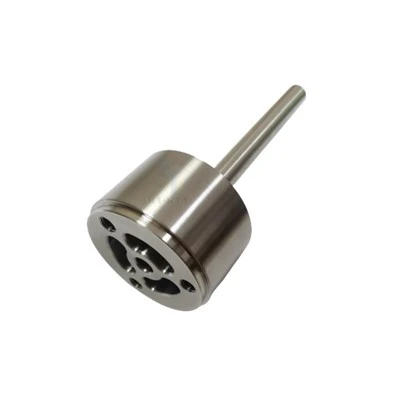


The Development History of CNC Lathes
The CNC lathe was developed in the 1950s. Early NC lathes incorporated tube and circuit hardware control with punched tape programming, a technology initially developed for the aerospace industry.
Since the 1970s, the integration of microprocessors into CNC systems has led to significant advancements in the field, including the development of computerized control with editable programs and display screens. Additionally, the introduction of servo drives has contributed to a steady improvement in machining precision.
From 1990 to 2010, significant advancements were made in the field, including the development of full closed-loop feedback, multi-axis linkage, and live tool turrets. These innovations enabled turning-milling composite lathes to achieve multi-process one-setup machining, a major breakthrough in manufacturing efficiency.
Modern CNC lathes are developing in a number of key areas. These machines are becoming more precise, faster, and capable of compound machining. They are also becoming more networked and intelligent. These advances make them well suited to producing custom precision turning parts in a variety of fields, including medical, electronics, new energy, and machinery.
Advantages and Features of CNC Lathes
Modern CNC lathes deliver outstanding stability, high precision, and great flexibility for precision metal machining. These machines are equipped with servo drive systems and closed-loop positioning control, enabling them to maintain consistent dimensional accuracy within ±0.005mm to ±0.02mm. This ensures the elimination of manual errors and the maintenance of excellent part uniformity in mass production. CNC lathes are engineered for precision and versatility, making them ideal for rotary components such as shafts, sleeves, bushes, pins, and disc parts. These machines are compatible with a wide range of materials, including brass, stainless steel, aluminum, and carbon steel, ensuring a suitable option for various industrial applications. The equipment features high automation, operating automatically after one-time programming, requiring minimal manual intervention and suitable for both prototype sampling and large-batch production. Advanced turning-milling composite models are capable of performing turning, milling, drilling, and tapping processes in a single clamping setup. This capability significantly reduces processing time and enhances production efficiency. Flexible programming adjustment allows for streamlined product switching, eliminating the need for complicated tooling replacement. This feature ensures seamless alignment with the demands of multi-variety, small-batch, and customized overseas orders, enhancing operational efficiency and precision. Furthermore, the stable cutting movement minimizes vibration and burrs, ensuring a superior surface finish that adheres to stringent export quality standards. Standardized programming and traceable production processes also simplify operation and professional quality management.

Hot Tags: customied CNC lathe services, China customied CNC lathe services manufacturers, suppliers